Historia de los Nudos y el Arte de Anudar: A Spanish Navy Column's Deep Dive Into Rope and Knot History
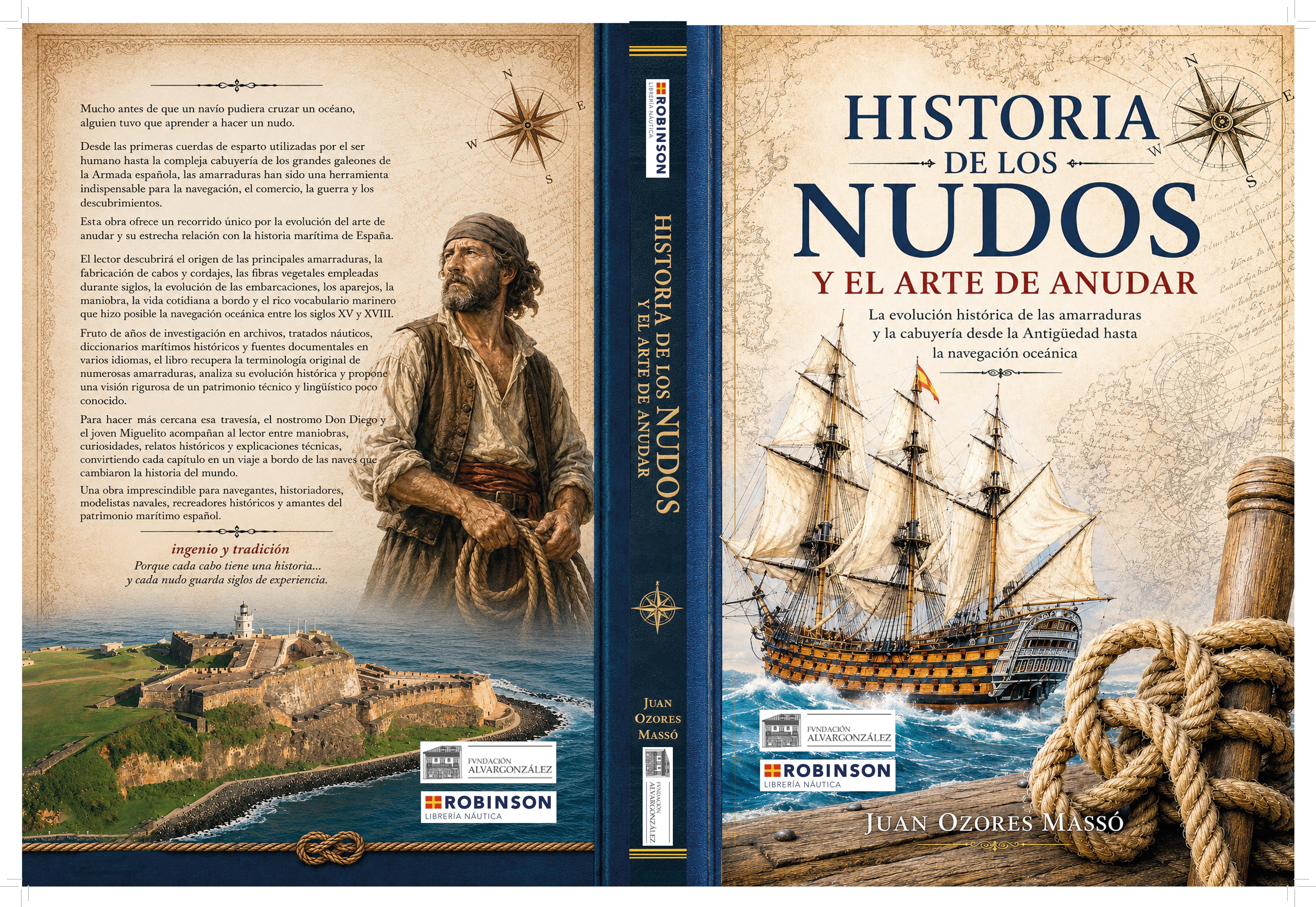
Every knot on a ship's rigging is a small piece of engineering passed down for thousands of years by people who mostly never wrote it down — until someone finally did. Historia de los Nudos y el Arte de Anudar: La Evolución Histórica de las Amarraduras y la Cabuyería desde la Antigüedad hasta Nuestros Días by Juan Ozores Massó traces that unwritten history, from the first fiber cords twisted by hand to the specialized bends, hitches, and splices that kept sailing ships rigged, moored, and afloat.
Author: Juan Ozores Massó
Title: Historia de los Nudos y el Arte de Anudar
Publisher: Náutica Robinson (2026, 1st edition)
Format: Paperback, Spanish
Buy: nauticarobinson.com (not currently available on Amazon)
A Navy Column Years in the Making
Before it was a book, this material ran for years as a recurring feature in Revista General de Marina, the official journal of the Spanish Navy — each installment walking through a single knot, hitch, or splice (encapilladuras, cotes, costuras de enguillado) with the same historical rigor a naval officer would expect. Ozores Massó gathers that column into a single reference, organized so a reader can follow the logic of one technique at a time instead of hunting through decades of back issues.
From Antiquity to the Age of Sail — and Beyond
The scope is genuinely historical, not just technical: the book traces how amarraduras and cabuyería (moorings and cordage work) evolved from the earliest recorded rope-making to the specialized rigging vocabulary of the great sailing ships, and on into the knots still tied on boats today. Every knot gets a name, a use, and a lineage, so the same hitch a Bronze Age boatbuilder trusted turns out to still be doing exactly the same job on a modern mooring line.
Who It Is For
Sailors and knot-tyers who want the history behind the technique, not just the diagram; model-ship builders and naval history readers who already follow Revista General de Marina; and anyone who has tied a bowline a thousand times without ever wondering how old it actually is.
Part of the reading recommendations featured on books.sapiensverbum.com.


