La Supraconciencia existe by Dr. Manuel Sans Segarra: A Surgeon on Near-Death Experiences and Life After Life
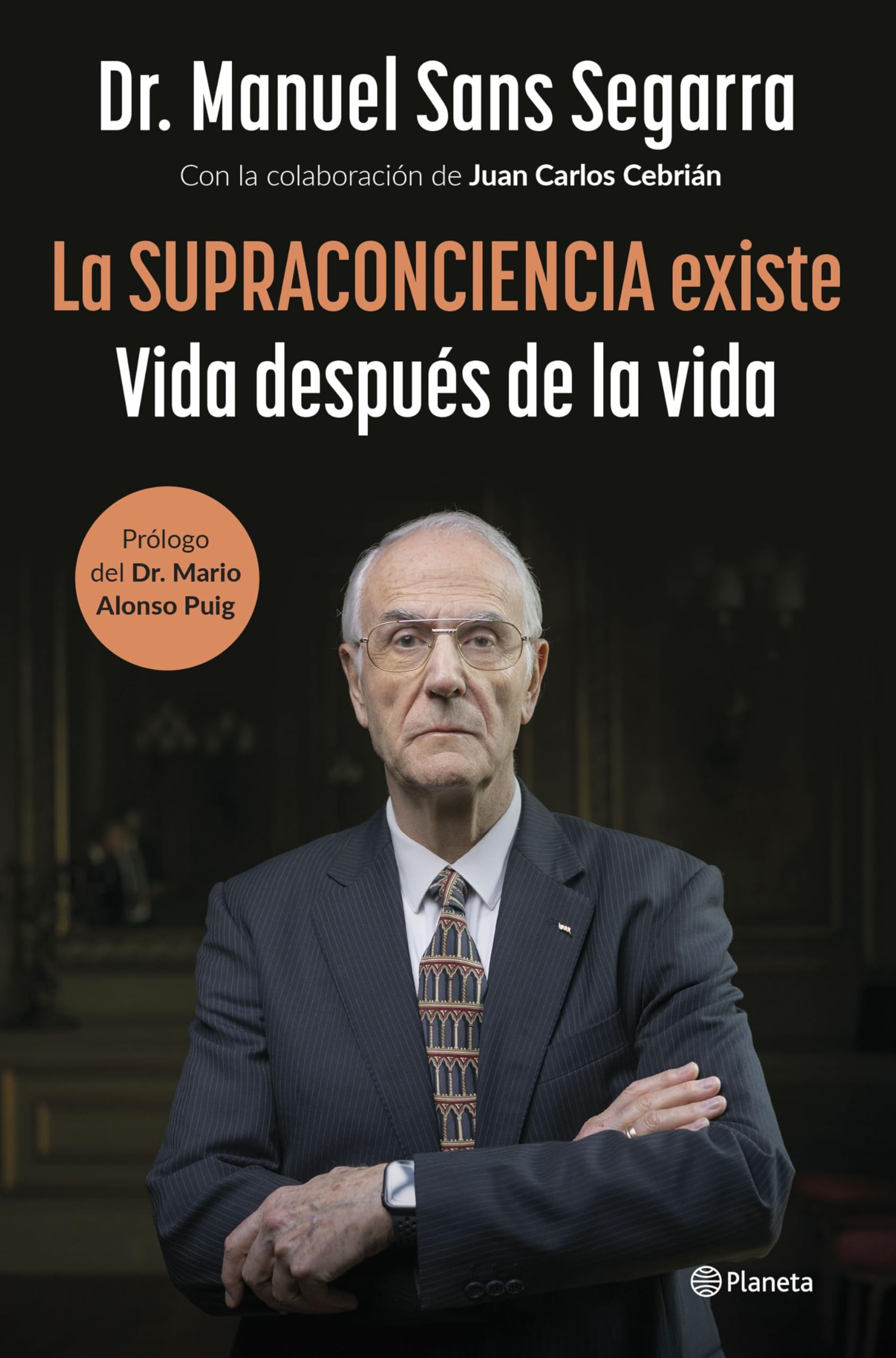
What happens to consciousness when the heart stops? Few questions are older, and few have produced so many best-sellers. La Supraconciencia existe: Vida después de la vida (“The Supraconsciousness Exists: Life After Life”) is the Spanish book in which the surgeon Dr. Manuel Sans Segarra, writing with the journalist Juan Carlos Cebrián, sets out his answer. Published by Editorial Planeta on 18 September 2024, it has become one of the most talked-about non-fiction titles in Spain.
Authors: Dr. Manuel Sans Segarra, with Juan Carlos Cebrián
Title: La Supraconciencia existe: Vida después de la vida
Publisher: Editorial Planeta, 18 September 2024
Format: Paperback (Spanish), 248 pages, ISBN 978-8408291282; also as a Kindle eBook, an audiobook and a pocket edition
Themes: Near-death experiences (NDEs), consciousness, quantum physics, spirituality and personal change
Amazon: La Supraconciencia existe on Amazon
A surgeon and the edge of death
According to his publisher, Manuel Sans Segarra is a surgeon specialised in general and digestive surgery who had a long career at the Hospital de Bellvitge, near Barcelona, and has devoted years to studying what he calls the supraconciencia, the “supraconsciousness”, and near-death experiences. His co-author, Juan Carlos Cebrián, is a journalist who met him in April 2023 and has since helped him take his talks and interviews to audiences around the world. Through lectures and social media, the doctor’s ideas have reached millions of people.
What the book argues
The publisher presents the book as an exploration of near-death experiences from a scientific and spiritual point of view, drawing on documented cases and on quantum physics to offer a new understanding of consciousness and of life after death, and to help readers overcome their fears and reflect on their own lives. Its central idea is that consciousness is not simply produced by the brain: the authors describe the supraconciencia as a non-local, timeless form of awareness that survives death, and compare the brain to a television set that receives a signal rather than creating it. Along the way they discuss the reports of people who were resuscitated, ideas about neuroplasticity, and the theory of the physicist Roger Penrose and the anaesthesiologist Stuart Hameroff that consciousness may arise from quantum processes in the brain.
Readers should know that these are the authors’ conclusions, not settled science. Near-death experiences are widely reported and taken seriously as experiences, but most neuroscientists explain them as events in a brain under extreme stress, and the idea that consciousness survives death remains a matter of belief and debate. The book is best read as a doctor’s personal synthesis of medicine, physics and spirituality.
Who it is for
Spanish-speaking readers who are curious about near-death experiences, grieving the loss of someone close, or drawn to the meeting point of science and faith will find a hopeful and very personal book here. Those who enjoy big questions about the mind may also like René Descartes: The Man Who Taught the World to Doubt, on the philosopher who split mind from body, and San Agustín de Hipona, on the saint who looked inward to find God. For a calmer, practical turn inward, see El poder del silencio.
As an Amazon Associate, this site earns from qualifying purchases.
💬 Over to you: Do you think near-death experiences point to something beyond the brain, or are they the brain’s last great mystery? And where in the world are you reading from? Tell us in the comments.

