Machiavelli in Spanish: El Principe in Modern Spanish and Maquiavelo Frases Celebres (Spanish Kindle)
“It is better to be feared than loved.” “The end justifies the means.” Few authors are quoted as often as Niccolò Machiavelli, sometimes with words he never wrote (the second line is a later summary, not his phrase), and few are read so rarely. The Prince, which he wrote in 1513 after losing his post in the government of Florence, is probably the most cited and most misunderstood book of political thought in Western history. Sapiens Verbum has published two Spanish books that approach him from different sides: a modern interpretation of the whole of The Prince, and a pocket collection of his sharpest sayings. Both are among the steady sellers of the series.
Author: Sapiens Verbum, on the work of Niccolò Machiavelli
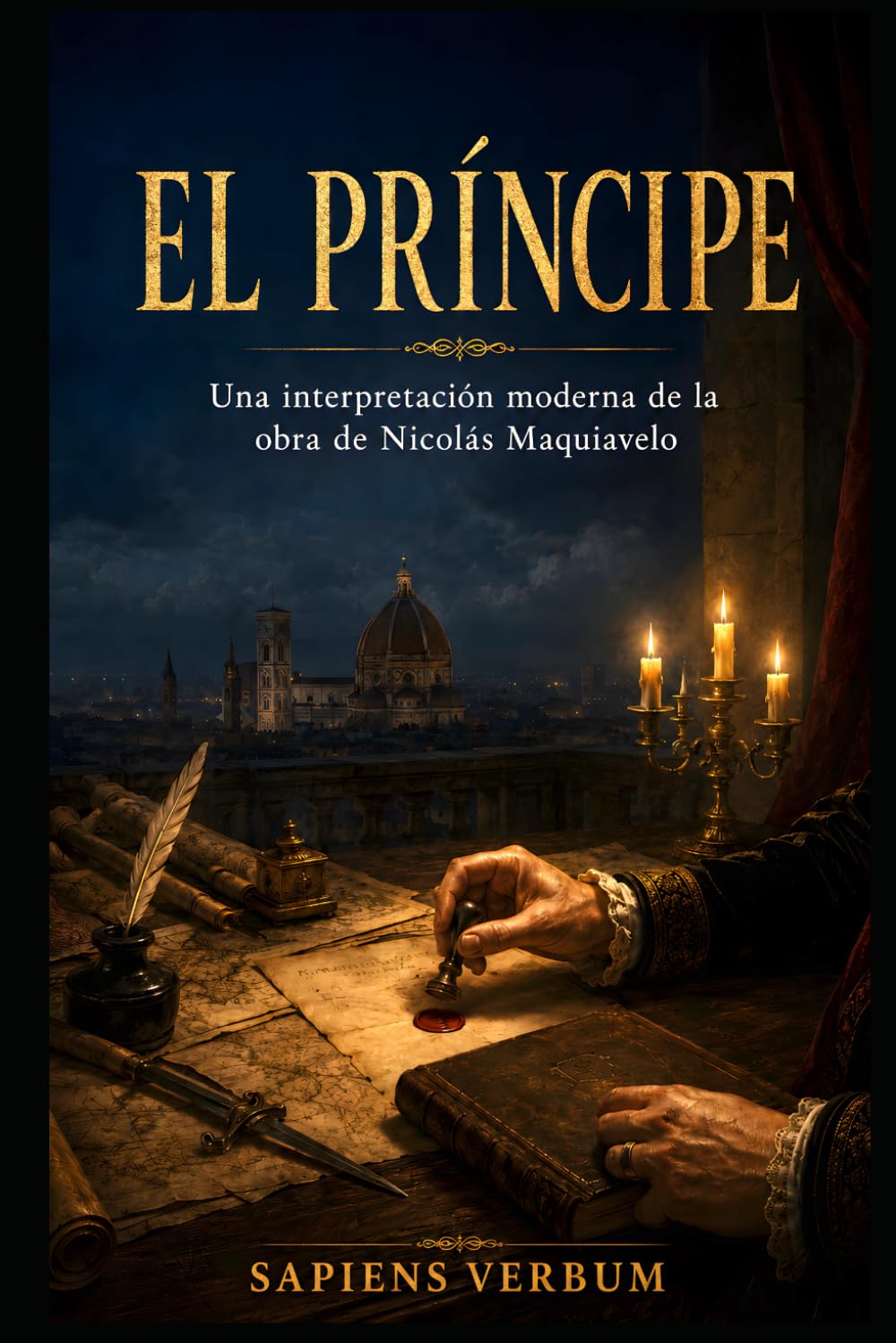
1. El Príncipe: Una interpretación moderna de la obra de Nicolás Maquiavelo (2026, 37 pages) — ASIN B0H9J3YP4B
2. Maquiavelo Frases Célebres: Dosis de Sabiduría de las Mentes Más Influyentes (2023, 29 pages) — ASIN B0CM21J9GH
Language and format: Spanish, Kindle and paperback
English edition: The Prince: A Modern Interpretation
A book written by a man out of work
Machiavelli (1469–1527) had served the Florentine Republic for fourteen years as a diplomat and secretary when the Medici returned to power in 1512. He was dismissed, briefly imprisoned and sent to live on his small farm outside the city. There, in 1513, he wrote a short treatise on how new princes win and keep power, and dedicated it to Lorenzo de’ Medici in the hope of returning to public life. The book was only printed in 1532, five years after his death, and was soon placed on the Church's Index of Prohibited Books. Its reputation for cynicism has followed it ever since.
1. El Príncipe: the whole argument, in today's Spanish
The Sapiens Verbum edition is not another academic translation. It is a modern interpretation, reorganised into six thematic parts and rewritten in contemporary Spanish, that follows the complete argument of the work without softening its most uncomfortable passages or reducing it to quotations out of context. According to its description, the reader discovers why Cesare Borgia is the central example of the book and what brought him down just when everything seemed secure; the difference Machiavelli draws between cruelty “well used” and “badly used”; the real meaning of “better to be feared than loved”, with the condition that is usually left out (a prince must above all avoid being hated); why relying on other people's forces, such as mercenaries and allies, is a mistake; and the famous image of fortune as a river in flood that can only be tamed by building dykes in calm weather. Each of the six parts ends with a section called “Lectura para hoy” (Reading for today) that connects the ideas with leadership, negotiation and strategy in professional life.
2. Maquiavelo Frases Célebres: the pocket version
The second book belongs to the “Dosis de Sabiduría” quotation series. It is a careful selection of Machiavelli's sharpest observations on leadership, morality, politics and human nature, meant to be read slowly and reread. It works well as a first contact with his thought, or as a companion to El Príncipe once you know the context from which the quotations come.
Get Maquiavelo Frases Célebres on Amazon →
Why read Machiavelli today
Machiavelli wrote for Renaissance rulers, but his subject was something that has not changed: how people behave when power, fear and ambition are at stake. His insistence on looking at things as they are, not as we would like them to be, is why managers, negotiators and strategists still read him. If you enjoy him, continue with the strategy classic The Art of War, or with Baltasar Gracián's maxims on worldly wisdom in The Pocket Oracle.
As an Amazon Associate, this site earns from qualifying purchases.
💬 Over to you: Is Machiavelli a cynic, or simply the first honest observer of power? And where in the world are you reading from? Tell us in the comments.

