The Questions of Life: Fernando Savater’s Invitation to Philosophy on Death, Time, Truth and Freedom
From its very beginnings, philosophy has tried to answer the complex questions human beings ask about their own existence: the origin of the universe, death, the passing of time. The Questions of Life (Las preguntas de la vida) is Fernando Savater’s invitation to think about them.
Author: Fernando Savater (born 1947), Spanish philosopher
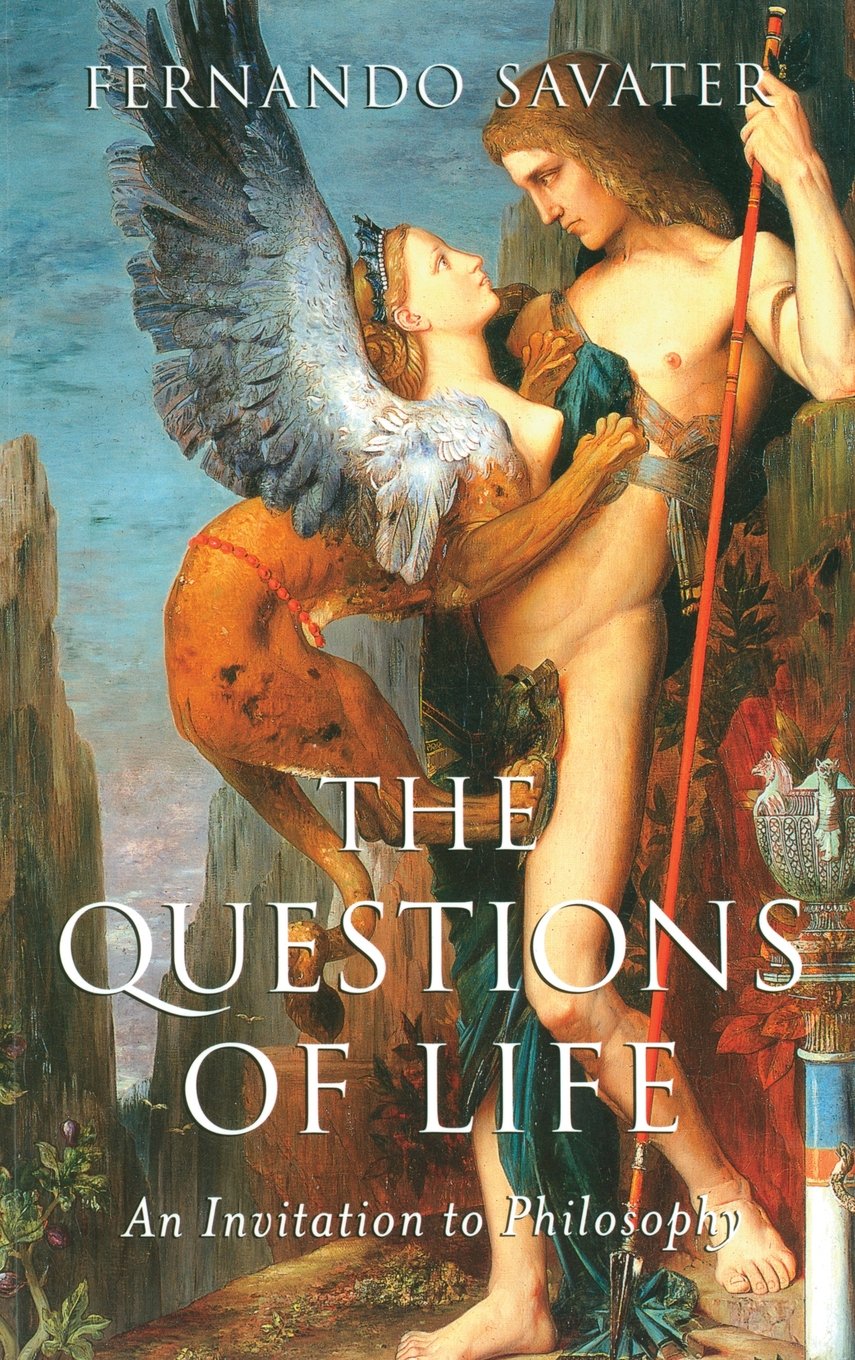
Title: The Questions of Life: An Invitation to Philosophy (Spanish original: Las preguntas de la vida, 1999)
Format: English hardcover (Polity)
Scope: Introduction to philosophy for general readers
Amazon: www.amazon.es/dp/0745626289 (ASIN 0745626289)
Questions Without Exact Answers
These important questions have been raised and debated by many philosophers throughout history, but their explanations are always open, because there is no single correct or exact answer. The book deals with a range of fundamental themes that anyone may think about at some point in life.
Where Science Stops
Science manages to explain a great deal, but there are still unresolved questions that are debated to this day. Savater takes them on from a personal perspective, with simple, concrete examples, so that the reader can follow the argument without any prior knowledge of philosophy.
Fernando Savater
Fernando Savater was born in San Sebastián in 1947 and taught philosophy at universities in the Basque Country and Madrid. He is one of Spain’s most widely read thinkers, with dozens of essays and several novels; his novel La hermandad de la buena suerte won the Premio Planeta in 2008. He has also been a prominent public figure, known for his opposition to ETA terrorism and his involvement in civic movements such as ¡Basta Ya!, which received the European Parliament’s Sakharov Prize in 2000.
After Ethics for Amador
In 1991 Savater published Ethics for Amador, a short book about how to live well, addressed to his teenage son. It was a huge success in Spain and abroad, and is still read in many schools. The Questions of Life, published in 1999, was conceived in the same spirit as a broader introduction to philosophy for young people, written in a direct, conversational tone that treats the reader as an equal rather than as a student.
The Big Themes
The book starts, characteristically, with death, the fact that makes us ask questions in the first place, and moves on to truth and reason, the self, freedom, nature and the universe, living together with others, beauty and time. In each chapter Savater introduces the ideas of classical and modern philosophers, but his aim is not to make readers memorise names: it is to show them how to think about these problems for themselves.
A Philosophy of Questions
Savater insists that philosophy is not a collection of answers but an attitude: the habit of asking why, and of not being satisfied with easy replies. That is what makes the book useful well beyond the classroom. Readers come away not with a list of doctrines but with a clearer sense of the questions worth asking, and some tools for asking them well.
Reading It
The chapters are short and self-contained, so the book works well for reading one theme at a time, and it lends itself to discussion in class or among friends.
It is also a good gift for any teenager who has started asking the big questions and is not satisfied with easy answers.
Adults will find plenty in it too.
It rewards a second reading years later, too.
Who Is It For?
Written by one of Spain’s best-known philosophers, it is a natural companion to his Ethics for Amador: ideal for students, for curious readers and for anyone who has ever wondered about death, time or freedom and wanted a friendly guide.
As an Amazon Associate, this site earns from qualifying purchases.
Part of the reading recommendations featured on books.sapiensverbum.com.

